Telehealth Weight Loss Programs: What They Are & How They Work

Weight loss is not a motivation problem for most people. It is an access problem.

Finding a weight loss program that fits your schedule, your health history, and your budget is genuinely difficult. In-person clinics often have long waitlists. Generic apps give generic advice. And most diets do not address the medical factors that make losing weight harder for some people than others.

Telehealth weight loss programs change that equation. They connect you with licensed medical providers through virtual consultations, give you access to evidence-based treatments, and provide ongoing support without requiring you to rearrange your life around clinic appointments.

This post explains how these programs work, what treatments are typically involved, who can benefit, and what to look for when choosing a provider.

What Are Telehealth Weight Loss Programs?

A telehealth weight loss program is a medically supervised weight management plan delivered through virtual consultations rather than in-person clinic visits. Instead of traveling to a weight loss center, you connect with a licensed provider through a secure video call, complete a health intake, and receive a personalized treatment plan based on your specific situation.

These programs are not the same as calorie-counting apps or generic meal plans. The key difference is medical oversight. A licensed provider reviews your health history, assesses any underlying factors contributing to weight gain, and recommends treatments, including prescription medication when clinically appropriate.

The core elements of a Miami telehealth weight loss program typically include an initial virtual consultation, lab work or health screening, a personalized treatment plan, prescription management if needed, and regular follow-up appointments to track progress and make adjustments.

Telehealth Weight Loss Programs

How Telehealth Weight Loss Programs Work

The process is more straightforward than most people expect. Here is what a typical program looks like from first contact to ongoing care.

Convenient Video Visits
Secure Online Access
Continued Follow-Up
Step One

Initial Consultation

You book a virtual consultation through the provider's website. Before your appointment, you complete a health intake form covering your medical history, current medications, previous weight loss attempts, and health goals. Your provider reviews this information before the session begins, so your consultation time is spent on clinical assessment rather than basic paperwork.

Step Two

Health Assessment and Lab Review

During the consultation, your provider assesses your overall health, discusses any conditions that may be contributing to weight gain such as thyroid issues or hormonal imbalances, and determines which treatments are clinically appropriate for you. Some programs require lab work, which can be ordered through a local lab and reviewed remotely.

Step Three

Personalized Treatment Plan

Based on your assessment, your provider creates a treatment plan. This may include prescription medication, nutrition guidance, lifestyle recommendations, and a follow-up schedule. The plan is documented and sent to you after the appointment.

Step Four

Prescription and Delivery

If prescription medication is part of your plan, your provider sends it electronically to a licensed pharmacy. Many telehealth providers work with compounding or mail-order pharmacies that ship directly to your home, removing the need to visit a pharmacy in person.

Step Five

Ongoing Follow-Up

Weight loss programs require monitoring. Your provider schedules regular virtual check-ins to review your progress, assess how you are responding to treatment, and adjust your plan as needed. This ongoing support is what separates medical weight loss from a self-directed diet.

Common Treatments and Support Options

Telehealth weight loss programs offer a range of treatments depending on the patient’s health profile and goals. Here is what you can typically expect to be available.

GLP-1 Receptor Agonist Medications

GLP-1 medications, including semaglutide (Ozempic, Wegovy) and tirzepatide (Mounjaro, Zepbound), are among the most effective prescription tools currently available for weight management. They work by mimicking hormones that regulate appetite and blood sugar, leading to reduced hunger and improved metabolic function.

These medications are prescribed only when clinically appropriate and require ongoing provider supervision. They are not suitable for everyone, and your provider will review contraindications before prescribing.

Weight Loss Peptides

Weight loss peptides are a category of compounds that work through different mechanisms to support fat metabolism and lean muscle preservation. They are used in some medical weight loss programs as part of a broader treatment plan. As with any prescription treatment, peptide therapy requires a clinical evaluation and ongoing monitoring.

Nutrition Guidance and Lifestyle Coaching

Medication alone does not produce lasting results without accompanying lifestyle changes. Quality telehealth weight loss programs include provider-guided nutrition recommendations and practical lifestyle coaching. This is not a generic meal plan. It is guidance tailored to your specific metabolic needs, health conditions, and daily routine.

Medication Review and Adjustment

Some medications, including certain antidepressants and other prescription drugs, can contribute to weight gain or make weight loss more difficult. A thorough provider review of your current medications, including options like wellbutrin which has been studied in the context of weight management, can identify whether adjustments might be appropriate to discuss with your prescribing doctor.

Hormone Optimization

Hormonal imbalances play a significant role in body composition and weight management. Low testosterone in men and hormonal fluctuations in women can make losing weight considerably harder. Addressing these imbalances as part of a broader weight loss plan can meaningfully improve results.

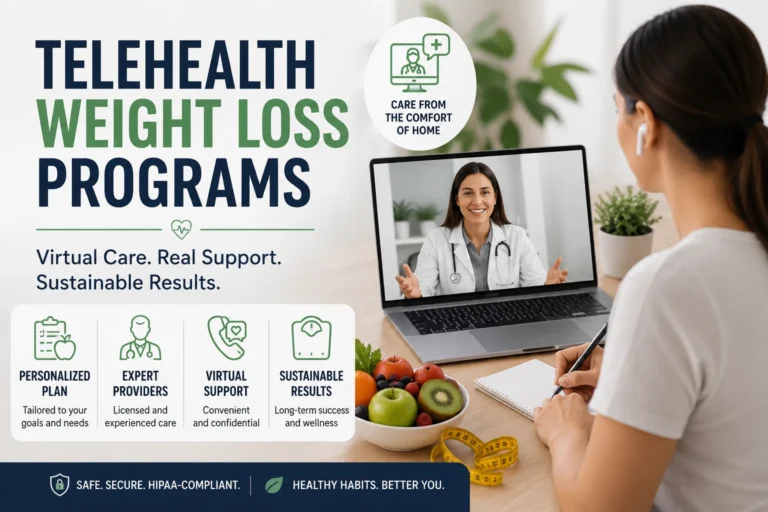
Virtual Weight Loss Care

Benefits of Virtual Weight Loss Support

Here is why more patients are choosing telehealth support as their preferred way to access care.

🌿

Access Without Barriers

You do not need to live near a weight loss clinic to access quality care. Patients in Miami, across South Florida, and throughout the state can connect with a licensed provider without factoring in commute time or clinic hours.

🔁

Consistent Follow-Up

One of the most common reasons weight loss programs fail is inconsistent follow-up. Virtual appointments remove the friction of in-person visits, making patients significantly more likely to attend their check-ins and stay on track.

Faster Access to Care

Most telehealth weight loss providers offer same-day or next-day appointments. Weight loss clinics often have wait times of several weeks. Starting sooner means seeing results sooner.

🛡️

Privacy and Comfort

Weight is a personal subject. Many patients find it easier to discuss their health honestly when they are in a familiar environment. Virtual consultations offer the same clinical care with more personal comfort.

Telehealth Weight Loss vs Traditional Weight Loss Clinics

Both options can be effective. The right choice depends on your circumstances, your health needs, and what you value most in a weight loss program.

Feature

Telehealth Program

Traditional Clinic

Appointment access

Same-day or next-day in most cases

Often 2 to 6 weeks wait

Location requirement

Anywhere in Florida

Must travel to clinic

Prescription availability

Yes, shipped to your home

Yes, collected in person

Ongoing follow-up

Virtual check-ins on your schedule

In-person visits required

Privacy

Attend from home

Clinic environment

Physical examination

Limited to visual assessment

Full physical available

Lab work

Ordered remotely, done locally

Conducted on-site

For patients who need comprehensive physical examinations, on-site lab work, or who prefer face-to-face interaction with their provider, a traditional clinic may be a better fit. For patients who value access, flexibility, and convenience without compromising on clinical quality, Telehealth Miami is a strong option.

Common Asked Questions

Can weight loss cause diarrhea?

Yes, it can. When you significantly change your diet, your digestive system needs time to adjust. High-fiber foods, protein supplements, and certain weight loss medications, particularly GLP-1 drugs like semaglutide, can cause digestive side effects including diarrhea, especially in the early stages of treatment. The symptom usually settles as your body adapts. If diarrhea is severe or persistent, speak with your provider, as your dosage or diet plan may need adjustment.

How much weight loss causes loose skin?

There is no fixed number, but loose skin becomes more noticeable after losing 50 pounds or more. The risk increases with the speed of weight loss, age, and how long excess weight was carried. Skin that has been stretched for years loses elasticity and may not fully contract after significant fat loss. Slower, medically supervised weight loss gives skin more time to adapt. Strength training and adequate protein intake also support skin elasticity during the process.

Can weight loss cause stretch marks?

Stretch marks are more commonly associated with rapid weight gain, but weight loss can make existing stretch marks more visible as the skin loses volume and tightens unevenly. In some cases, very rapid weight loss can also create new stretch marks as the skin shifts. Gradual weight loss under medical supervision reduces this risk compared to crash dieting or extreme calorie restriction.


FAQs

Yes, licensed telehealth providers can prescribe GLP-1 medications including semaglutide and tirzepatide when they are clinically appropriate for the patient. A proper consultation and health assessment are required before any prescription is issued. Medication is typically sent to a pharmacy and shipped directly to your home.

Weight loss unexplained refers to losing a significant amount of weight, typically more than 5 percent of body weight over six to twelve months, without intentional dietary changes or increased exercise. It can be a sign of an underlying medical condition and should always be evaluated by a licensed provider. Telehealth consultations are appropriate for an initial assessment, though further in-person testing may be needed.

Yes. Telehealth weight loss programs are available to patients throughout Florida, including Miami, Coral Gables, Brickell, Fort Lauderdale, Orlando, and beyond. As long as you are located in Florida at the time of your consultation, you are eligible to receive care through a Florida-licensed telehealth provider.