
How Does Telehealth Work? Everything Patients Need to Know

Virtual healthcare has quietly become one of the most practical developments in modern medicine. Millions of patients now manage ongoing conditions, consult with specialists, and receive prescriptions without ever leaving their homes, and the quality of care they receive is no different from what they would get in a clinic.

But if you have never tried it before, the process can feel unfamiliar. How does telehealth work exactly? What happens during the appointment? Can a doctor really assess you through a screen?

This guide explains exactly how telehealth Miami works, what you can expect during a virtual visit, and which conditions can be treated this way. By the time you finish reading, you will know exactly what to expect from booking your first appointment to receiving your treatment plan.

What Is Telehealth?

Telehealth is healthcare delivered remotely using technology. Instead of traveling to a clinic, you connect with a licensed provider through a secure video call, answer their questions, describe your symptoms, and receive medical guidance, all from wherever you are.

The term is sometimes used interchangeably with telemedicine services, though telehealth is slightly broader and can include video visits, phone consultations, and even messaging with a provider through a patient portal.

The key point is that telehealth is real medical care. The provider reviewing your case is a licensed healthcare professional, the consultation follows proper clinical protocols, and any prescriptions issued are legally valid.

How Does Telehealth Work

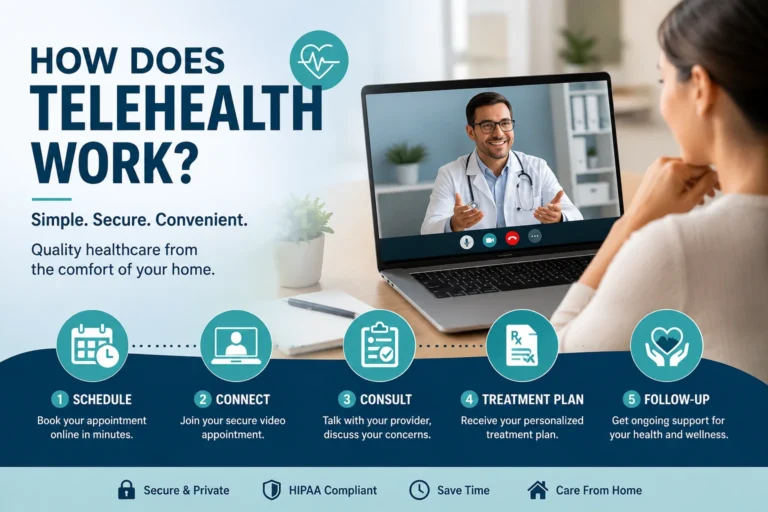
How Does Telehealth Work? A Step-by-Step Breakdown

The process is simpler than most people expect. Here is what a typical telehealth appointment looks like from start to finish.

Convenient Video Visits
Secure Online Access
Continued Follow-Up
Step One

Scheduling a Telehealth Appointment

You book your appointment online, usually through the provider's website or a booking system. Most platforms let you choose your appointment time, select the type of visit you need, and complete a brief health intake form before the session. This form gives your provider background on your health history, current medications, and the reason for your visit.

Step Two

Connecting With Your Provider

At the time of your appointment, you receive a secure link to join the video call. You click the link on your device, your camera and microphone activate, and within seconds you are speaking directly with a licensed healthcare provider. No waiting rooms and no commuting.

Step Three

The Consultation Itself

Your provider will ask questions about your symptoms or health goals, review the intake form you completed, and assess your situation based on what you share. For many common conditions, a visual examination through the camera combined with the information you provide is sufficient for a diagnosis or treatment recommendation.

Step Four

Receiving Your Diagnosis or Treatment Plan

After the consultation, your provider issues a written treatment plan. If a prescription is appropriate, it is sent electronically to your preferred pharmacy or delivered to your home. You receive documentation of the visit and any follow-up instructions.

Step Five

Follow-Up Care

Telehealth is not a one-and-done service for ongoing conditions. Your provider schedules follow-up appointments as part of your treatment plan. Between visits, most platforms allow you to message your care team through a secure patient portal if questions come up.

What Conditions Can Be Treated Through Telehealth?

This is one of the most common questions people have, and the answer covers more than most patients expect. Remote healthcare is suitable for a wide range of conditions and health goals.

General Health and Primary Care

  • Cold, flu, and upper respiratory infections
  • Sinus infections and allergies
  • Urinary tract infections
  • Ear infections and minor skin conditions
  • Routine check-ups and health screenings
  • Lab result reviews and medication adjustments

Chronic Condition Management

  • High blood pressure and diabetes monitoring
  • Thyroid disorders and hormonal imbalances
  • Asthma and respiratory conditions
  • Anxiety, depression, and mood concerns
  • High cholesterol management

Wellness and Specialized Services

  • Weight loss Services including GLP-1 therapies like semaglutide
  • Testosterone replacement therapy and hormone optimization
  • Prescription refills for ongoing medications
  • Preventive wellness and lifestyle counseling
  • Peptide therapy and vitamin consultations
Patient Benefits

Benefits of Telehealth for Patients

The practical advantages of Florida virtual healthcare go beyond simple convenience. Here is why more patients are choosing online doctor visits as their preferred way to access care.

🏠

No Travel Required

You attend your appointment from home, your office, or anywhere with a reliable internet connection. For patients in Miami managing a busy schedule, this removes one of the biggest barriers to consistent healthcare.

⏱️

Shorter Wait Times

Most telehealth providers offer same-day or next-day appointments. Compare this with the average wait of several weeks to see a specialist in person, and the difference is significant.

🤝

Continuity of Care

For ongoing conditions, regular telehealth check-ins make it far easier to stay on track with treatment. You are more likely to attend follow-up appointments when they do not require taking time off work.

🌿

Access Across Florida

Patients anywhere in Florida can access the same quality of care as those living close to major medical centers. For patients in smaller cities or rural areas, telehealth closes a significant access gap.

Are Telehealth Appointments Secure?

This is a fair concern. When it comes to healthcare, privacy matters. The short answer is yes, legitimate telehealth platforms are required to meet the same privacy standards as traditional in-person care.

In the United States, all healthcare providers must comply with HIPAA, the Health Insurance Portability and Accountability Act. This applies to telehealth just as much as it applies to in-person visits. That means your video appointments, your health records, and any communication through a patient portal must be encrypted and protected.

Reputable telehealth platforms use end-to-end encryption for video calls, which means the content of your consultation cannot be intercepted. Sessions are not recorded without your explicit consent. Your health information is not shared with third parties.

When Should You Use In-Person Care Instead?

Telehealth is genuinely useful for a wide range of situations, but it is not always the right option. A good telehealth provider will tell you honestly when in-person care is more appropriate.

Consider in-person care when:

  • You are experiencing a medical emergency or severe symptoms that need immediate physical attention
  • Your condition requires physical examination, such as checking reflexes, listening to heart sounds, or palpating an area of concern
  • You need diagnostic imaging such as X-rays, MRI, or CT scans
  • You require blood work or other lab tests that cannot be done at home
  • Your provider has recommended in-person follow-up after reviewing your case remotely

If you are ever unsure, it is fine to start with a telehealth consultation. Your provider can assess your situation and advise you on next steps, including whether an in-person visit or emergency care is necessary.

FAQs

Most telehealth platforms are designed to be simple. If you can make a video call on your phone, you can use telehealth. You receive a link by email or text, click it at your appointment time, and the video session opens. No downloads or accounts are required on most platforms.

Yes. Licensed providers can prescribe most medications during a telehealth consultation, provided the prescription is clinically appropriate. Controlled substances have different regulations, but for most medications including weight loss treatments, hormone therapy, and common antibiotics, prescriptions can be issued the same day.

Many insurance plans do cover telehealth visits in Florida. Florida state law requires most insurers to provide coverage for telehealth services. Coverage varies by plan, so it is worth checking with your insurer before booking. Self-pay options are also available at transparent rates, and FSA and HSA funds are accepted by most telehealth providers.

A standard telehealth consultation typically runs between 15 and 45 minutes depending on the complexity of your concern. Initial appointments tend to be longer since the provider needs to review your full health history. Follow-up visits for existing conditions are usually shorter.

Yes. Telehealth services are available to patients anywhere in Florida, including Miami, Fort Lauderdale, Orlando, Tampa, and smaller cities across the state. You can attend your appointment from home, work, or anywhere in Florida with a reliable internet connection.